Soil Tonics

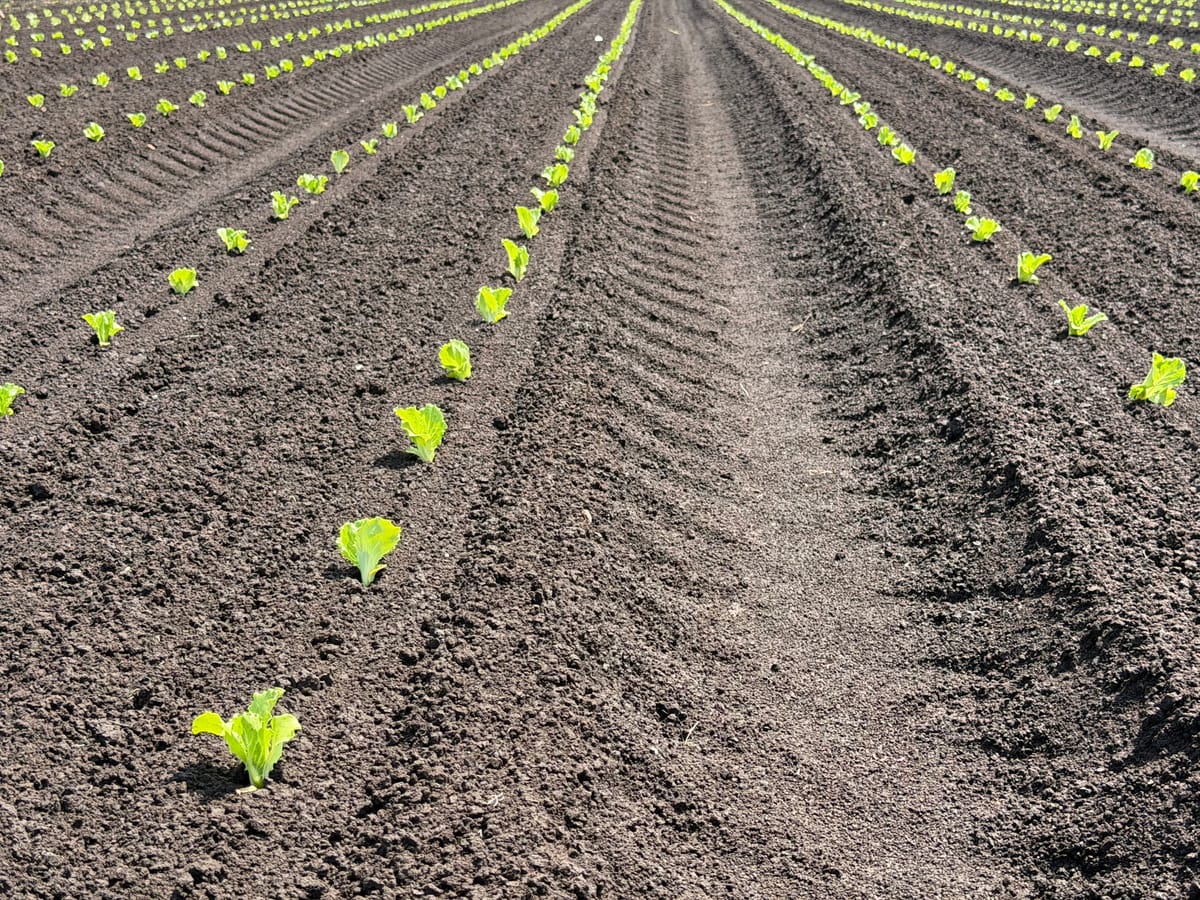
There is/was a trend in home gardening and potted plant enthusiasts of the magic of plant tonics. Being an Australian I am well aware of big Seasol, Neutrog, insect frass and worm juice amongst others that heavily promote the use of tonics for plants with the familiar white Seasol container likely seen in many Australian homes. But beyond being a commercial success what do they actually do and how do they differ from fertiliser?
The term plant tonic is interesting because when you hear the word referred to in human health it brings up thoughts of snake oil or hair regrowth products with dubious history. When I was a kid it frequently heard of these products being called fertiliser but they have now embraced the term tonic. Having expertise in the industry I can tell you that the average consumer doesn’t know the difference between a tonic and a fertiliser and that many professionals immediately dismiss tonics off hand because they are Not a fertiliser. So what gives?
Well in Australia at least we have a National Code of Practice for Fertiliser Description & Labelling that sets out standards for what can be called a fertiliser based on its lab analysis. Before we get into that note that the barrier to entry is already reasonably high here to call something a fertiliser because you have to pay a lab to analyse it to ensure what you are selling contains actual elements that plants need to grow and that you know what form they are present in. So many products you see that decide to call themselves tonics may have simply decided that they either can’t afford to or don’t want to spend the money on the analysis work required to claim fertiliser status.
Say you want to produce your worm juice and sell it as a fertiliser and send it off for testing then the next hurdle is to meet the minimum levels for inclusion of nutrients. Now simply this is based on weight for weight for solids or weight for volume for liquid products. Basically 1% w/w = 10g/kg or 1% w/v = 10g/L. Take for example a fertiliser product claims it contains 18% Nitrogen that means that there must be at least 180g of nitrogen per kg of final product in addition to all other fertilisers in that product. Now to be called a fertiliser that contains nitrogen then it must contain at least 0.5% w/w or 5g of nitrogen in the final product. This is the same for potassium, phosphorus, sulphur, calcium, magnesium and silicon. Other nutrients have different requirements and liquids have their own table as seen below. The reasoning behind this is stated as preventing misleading claims that a product provides a nutrient when the concentration is too low to provide “any recognised nutritional benefit.”
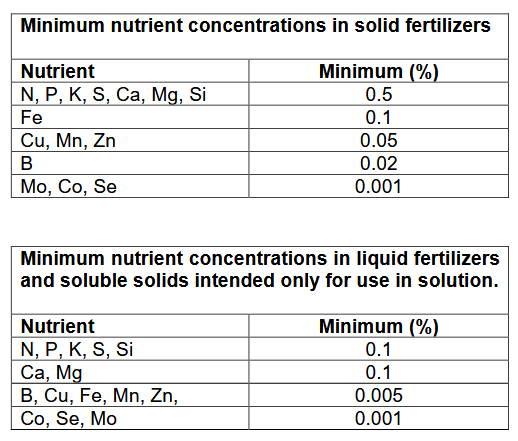
So case closed right, if its not a fertiliser then it does not contain recognised nutrients to a level that would show any nutritional benefit. Well, sometimes the rules also state that if you don’t make claims about a certain nutrient then the testing requirement doesn’t exist. If you call your product a tonic and don’t specifically mention that the nitrogen in the product is what is making the leaves greener then you may not have to do the analysis and add the labels (not legal advice.) So why would someone want to do this? Well a lot of tonic loving hippies may simply want to not give money to power (the man) and rely on word of mouth and anecdotal evidence to show it works, people may try passing off a product with claims of results but rely on trust as the proof or maybe there is more to soil and plants then the elemental nutrients NPKS etc… Notice I have not mentioned soil microbes, plant hormones, fungi or other “new” concepts that could have beneficial effects on the soil and plants in your garden and pots.
This bring us to the section, “Fertiliser isn’t everything, but it is a lot of things.” Many tonics proudly reject the term fertiliser as something potentially lesser or unimportant in the grand scheme of things and tonics (or brews, juice, concentrates, whatever) are the future because they “unlock” the inherent power of your soil using the magic of biology! Now that does make them sound like your wooey hippy uncle that never left the 70s but they are skirting some promising concepts that many scientists have yet to deeply investigate. Now being a scientist myself, I do not follow the trend of thinking there is some company based, science-based conspiracy trying to control the masses through questionable means. I do however know that science is extremely slow, performed by fallible humans and often forgets the fact that not yet known is not the same as not potentially true. That and the fact of science communication has been horrible since Carl Sagan left us (Hank Green excluded.)
Some general concepts that tonics are aiming for don’t have great scientific backing as of this article. The general idea, as I understand it, is that the majority of plant needs nutritionally are already in the soil, mostly the mineral portion, and bacteria and fungi use acids and other biological symbiotic processes to liberate nutrients and make them bioavailable to plants. If true, this would mean that most of the energy-intensive fertilisers we have been adding to crops (besides Brawndo) were mostly unnecessary, and we could have recruited the microorganisms to do the work for us. This isn’t as crazy as it sounds; the logic is fair. Plants were growing well before the Haber-Bosch method was but a twinkle in the German war-mongers’ eye. The soil didn’t just appear as is 6000 years ago it slowly accumulated over millions of years through mechanical (erosion), biological (acids) and other means from rocks to make the inorganic portion, the organic section comes from dead things and poop. Those elements that we refer to as fertiliser come from both the rock and organic portion.
There is one important factor missing with this theory however. It may be possible for natural processes to feed the plants but we also are asking a lot more from plants than the soil is generally able to supply. There is a concept of mining the soil, which if we just use microbes and tonics while heavily cropping the land then we can actually use up most of the natural fertility. I believe this was a large problem that likely didn’t help during the dust bowel in 1920s America and has been seen in the Brigalow region of Australia’s Darling Downs region today. The whole point of fertiliser is to replace the nutrients we remove from the soil. The soil can provide so much but we are asking a lot from it, chemical fertiliser isn't an inherently bad thing, like with all tools there are other options and a correct way to utilise each one.
Whether you are a Soil health messiah or a farm manager, we all have the same goal. Grow product at a profit to feed people and do it in a way that allows us to keep doing it indefinitely. As time moves forward and we keep trying different ways of doing that we will improve all our tools in ways we can't fathom yet.